
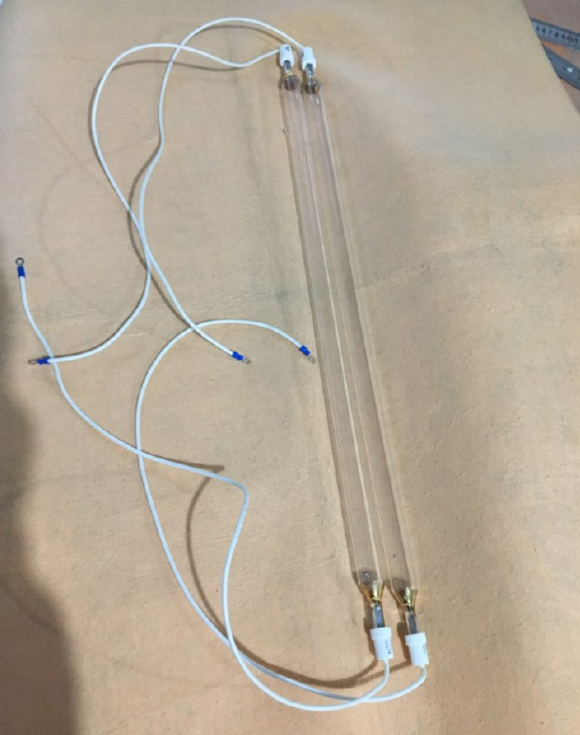
Stop Guessing With Your UV Lamps
Most industrial UV lamps are pretty basic. You flip a switch, they turn on, and you just hope they’re hitting the right microwatt targets for your curing or sterilization. But here’s the problem: once those lamps are wired in, you’re basically flying blind. You have no real-time data on what’s actually happening inside the machine. We decided that wasn’t good enough. So, we started building remote energy monitoring right into the lamp setup.
The “Invisible” Problem
UV degradation is a sneaky thing. A lamp can look perfectly bright to your eyes, but the actual UVC output could be tanking because the quartz is aging or the ballast is acting up. It’s a nightmare. You don’t know there’s a problem until your product fails a quality check, and by then, it’s too late. By tracking power draw and voltage stability at the source, we take the guesswork out of it. If a lamp starts to drift, the system flags it immediately. You catch the slip-up before it becomes a costly mistake.
The Nitty-Gritty (and the Trade-offs)
We put these sensors inside the ballast or a smart controller. This means you can keep an eye on your entire production line from one dashboard, seeing exactly how many watts you’re pulling and how many hours the lamps have actually run. Now, it’s not all magic. there are a few things to keep in mind. First, adding this gear means your control box will be a bit bigger. Second, you’ll need a solid network—Wi-Fi or Ethernet—to move the data. And if your shop floor is loud with electromagnetic interference (EMI), you’ll want to use shielded cabling. Otherwise, you’ll just get “noisy” data that doesn’t mean anything.
Making Life Easier
The best part? This changes how you handle maintenance. For years, the rule was to swap every lamp every 9,000 hours. Period. Even if the lamp was still working perfectly. That’s a lot of wasted money and unnecessary downtime. Now, you just watch the energy profile. When the efficiency actually drops, you swap the lamp. It’s that simple. You see a spike, find the part that’s failing, and fix it before the whole line grinds to a halt.